

Long time no see! It’s me, one of our SUZUICHI staff members ☺️
I have to confess, I’d completely forgotten…
You know, the stuff I made back around February this year and left to rest…
The miso…!
Click here for Making Homemade Peanut Miso ♪ [Part 1]
Why I Tried Making Homemade Peanut Miso
I’d been wanting to try making my own miso (fermented soybean paste) for a while, and then a question suddenly popped into my head!
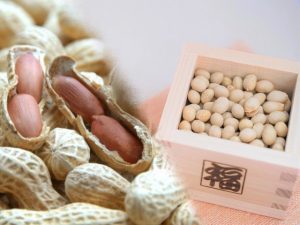
Almost all miso is made from soybeans, but…
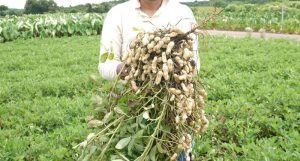
Can you make miso from peanuts?
So I decided to actually give it a try ✊✨
Making the Homemade Peanut Miso
I decided to make the miso in February, probably the coldest month of the year. Miso made at this time of year is called kan-jikomi (cold-season brewing). Apparently mold is less likely to grow and fermentation progresses slowly, which makes it ideal for miso making 💡
I made three batches in total.
That way I could compare how they turned out.
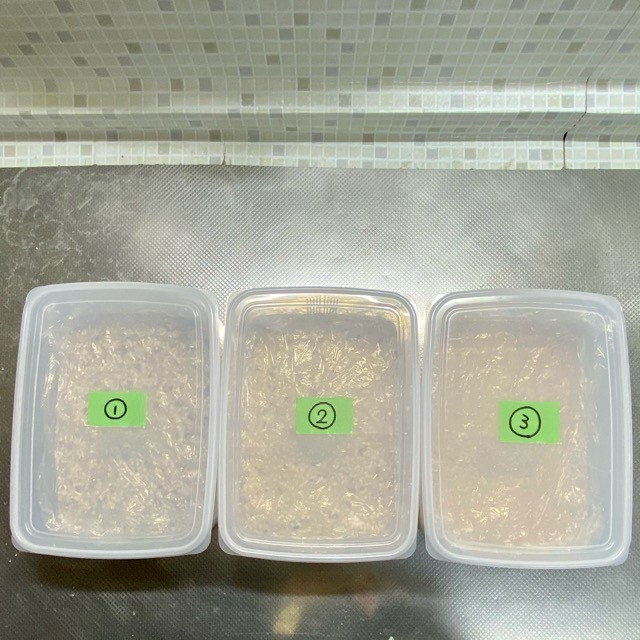
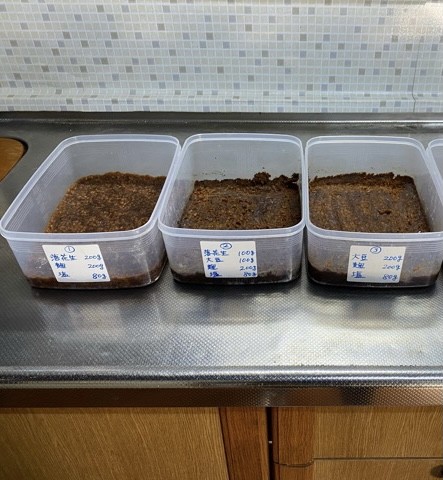
Container ① is miso made with peanuts only.
Container ② is miso made with a mix of peanuts and soybeans.
Container ③ is miso made with soybeans only.
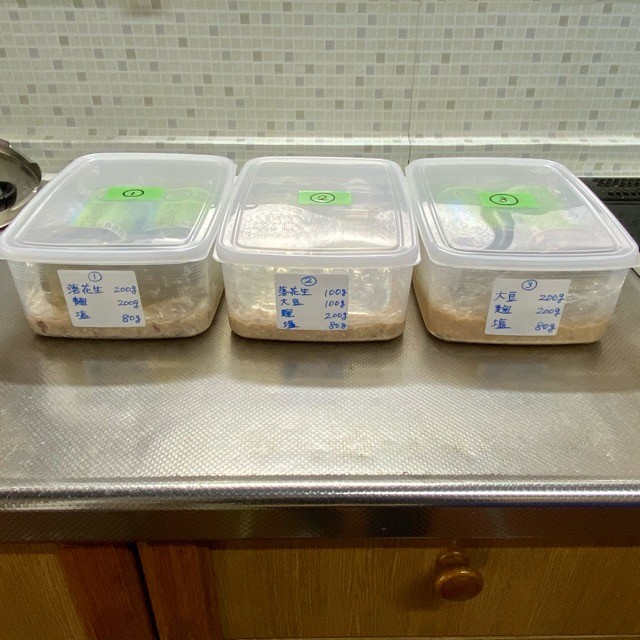
What the labels say: ① peanuts 200 g, koji (rice malt, the fermentation starter) 200 g, salt 80 g / ② peanuts 100 g, soybeans 100 g, koji 200 g, salt 80 g / ③ soybeans 200 g, koji 200 g, salt 80 g
Will Homemade Peanut Miso Ferment? My Prediction…
From the very start, my prediction was “it won’t ferment” ← not very confident, I know
My reasoning: if peanuts could ferment into miso, I figured peanut miso would already be on sale somewhere around us.
But wait… if it does ferment and turns into peanut miso, wouldn’t that be a new discovery? Wouldn’t that be amazing?
With thoughts like that running through my head…
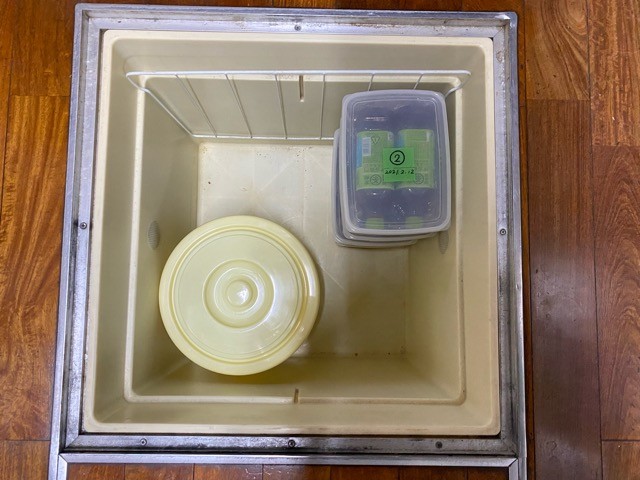
I put them away, wishing with all my heart that they’d turn into delicious miso ✨
・
・
Nine months went by
Before I knew it, it was November.
Did it ferment properly and turn into miso?!

Here goes! Time to check!!
?
?
!?
Whoa!! The color has gotten darker!
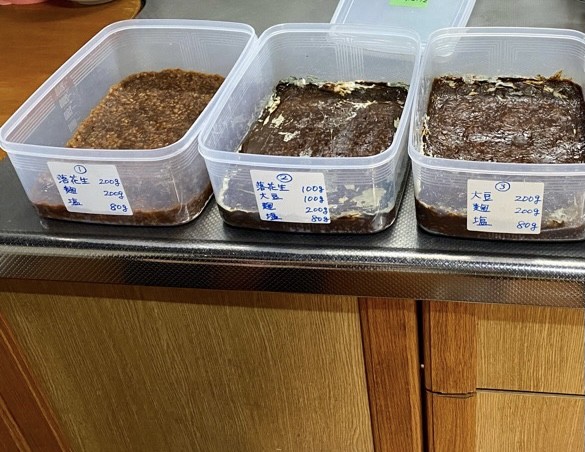
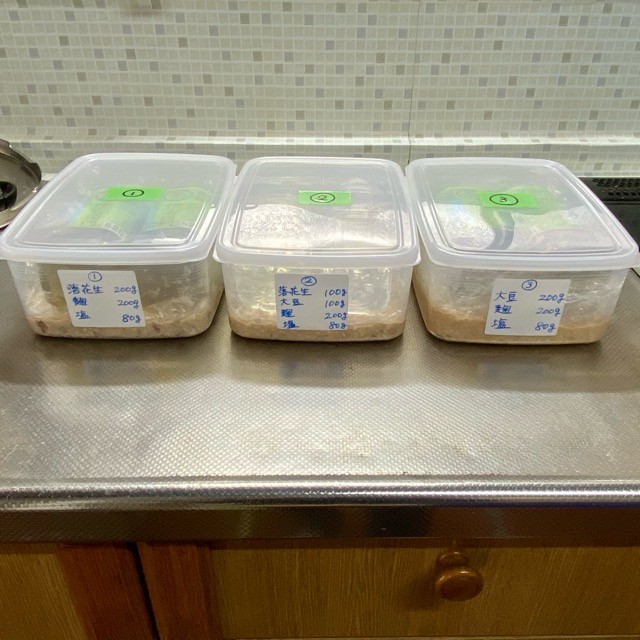
The color is clearly different from when I first made them.
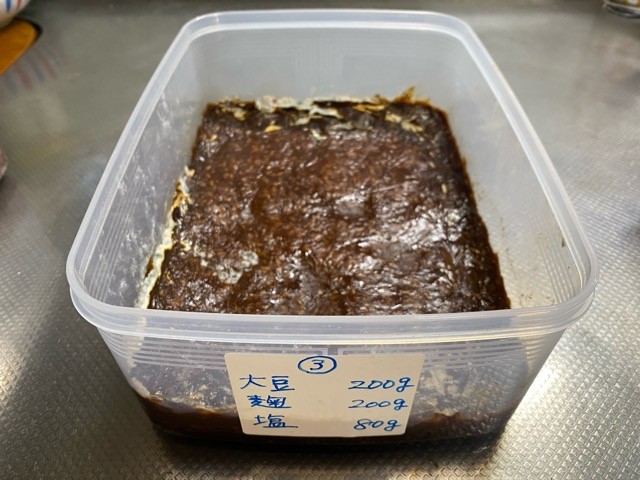
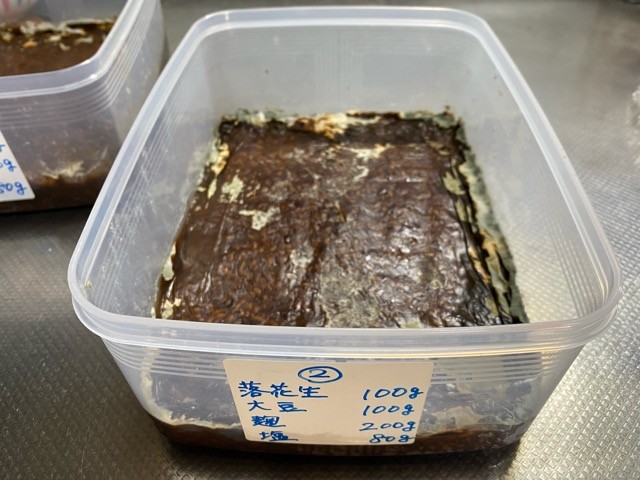
Mold has appeared here and there on miso ③ and ②… (sob)
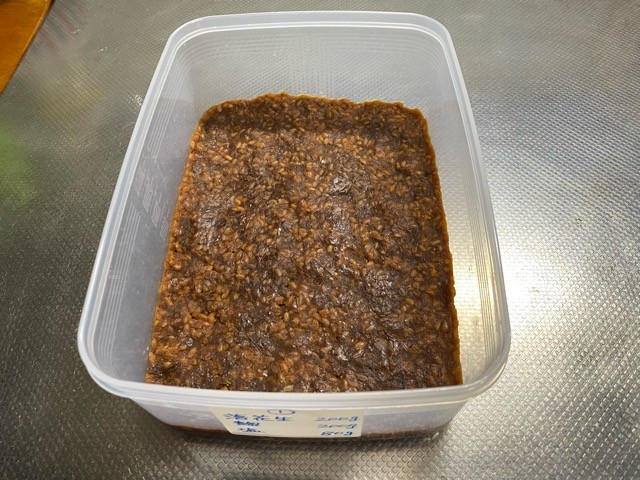
The peanut miso, on the other hand, had no mold at all.
The Moment of Truth! Tasting the Homemade Peanut Miso!
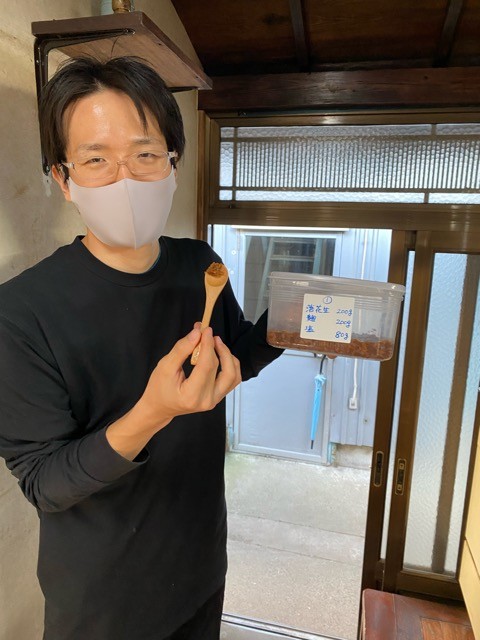
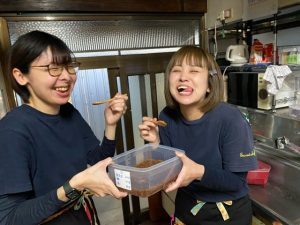
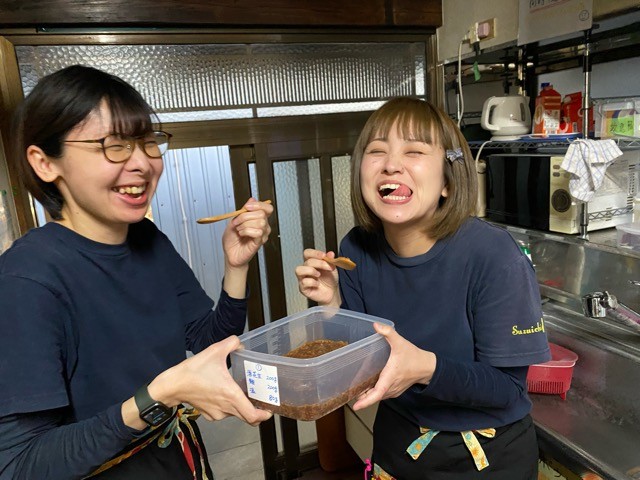
When I made the peanut miso, they promised to be the first to taste it, as the official poison tester (heh heh)
So, as promised, they get the first bite ✊ lol
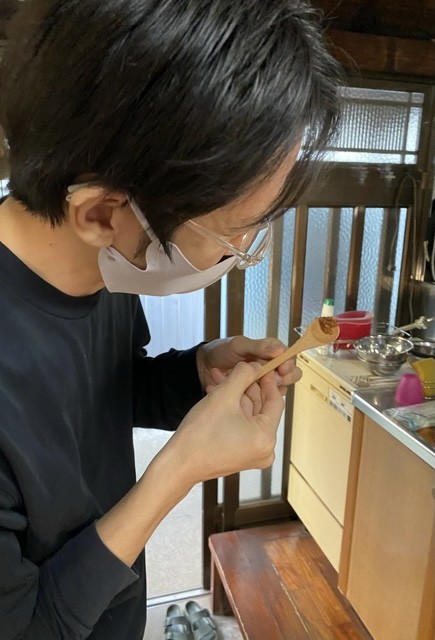
Next, another of our shop staff members gave it a try.
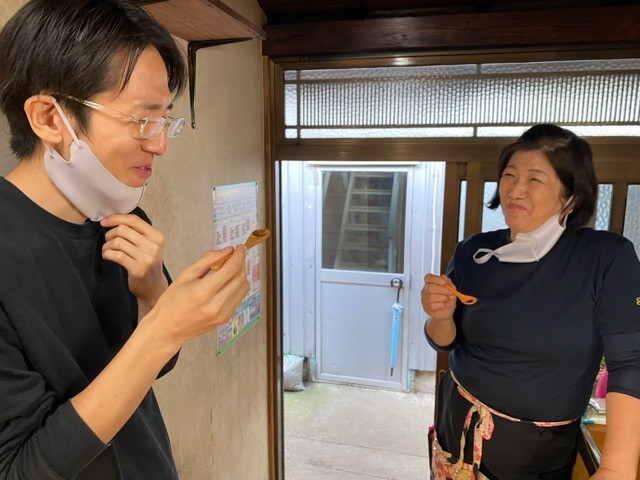
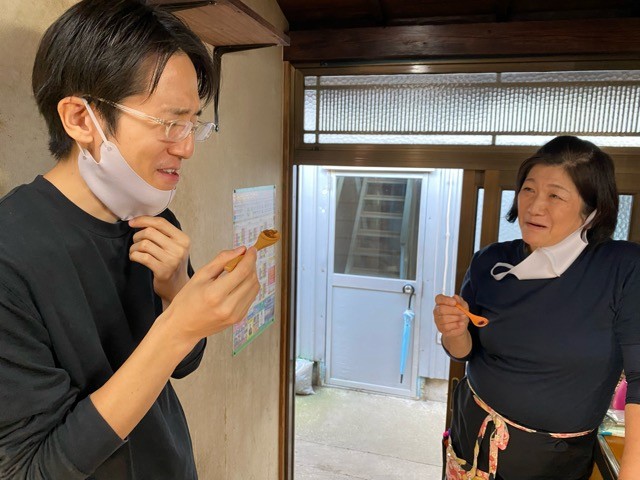
They said the texture was kind of dry and crumbly.
O-of course I tried it too ✊
Hmm. What is this smell? (It’s hard to describe.)
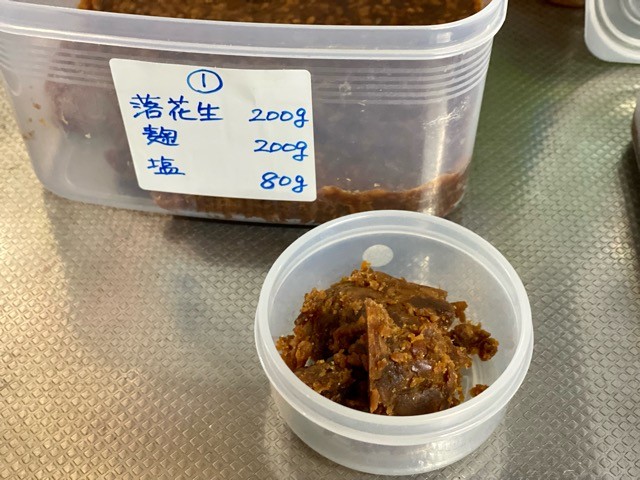
Okay! Next, I called over yet another shop staff member to try it.
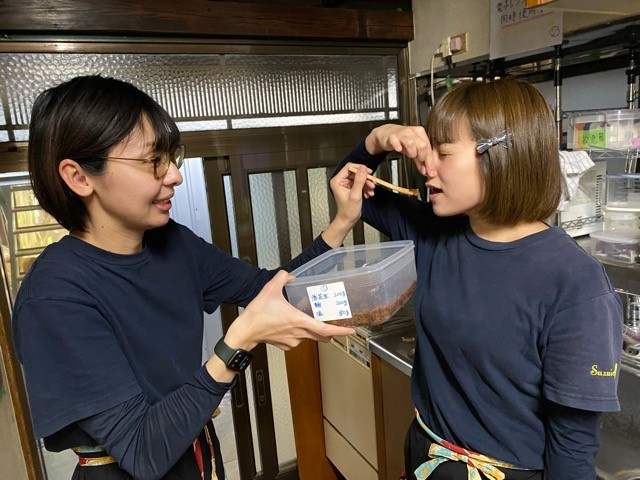
They instinctively pinched their nose (please don’t make that face!)
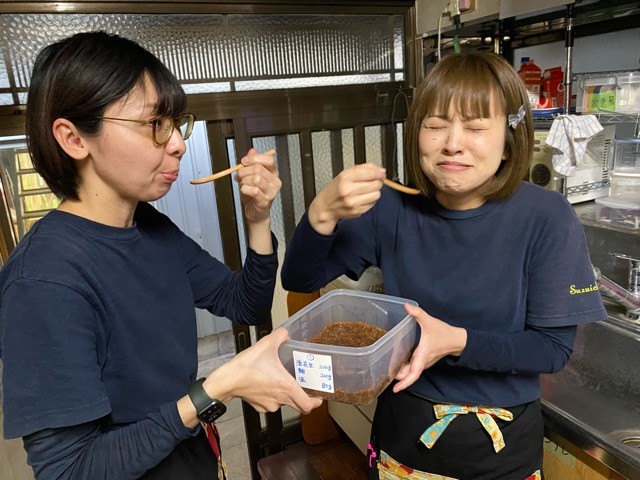
The moment you put it in your mouth, it’s salty, and you can really feel the grainy texture of the salt and koji.
So that’s what the president and my coworker meant by “dry and crumbly.”
Even after tasting it, I still couldn’t figure out what that indescribable smell coming from the peanut miso was…
The Results
I made all three batches with the same amounts, but
only ① the peanut miso seemed not to have fermented properly.
② the peanut and soybean miso wasn’t as bad as ①, but its smell still bothered me.
And ③ the soybean miso was really delicious ◎
This is just my guess, but peanuts contain a lot of oil, so maybe they don’t get along well with koji mold and didn’t ferment. And since peanut miso has a distinctive smell and doesn’t taste as good as soybean miso, that may be why you don’t see it in stores.
I realized that soybeans really are the best for making miso.
Lessons Learned from Making Peanut Miso
★All three batches were dry and crumbly, so maybe I didn’t soak the beans long enough, or didn’t boil them long enough.
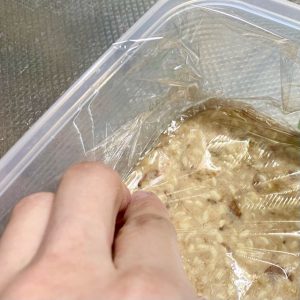
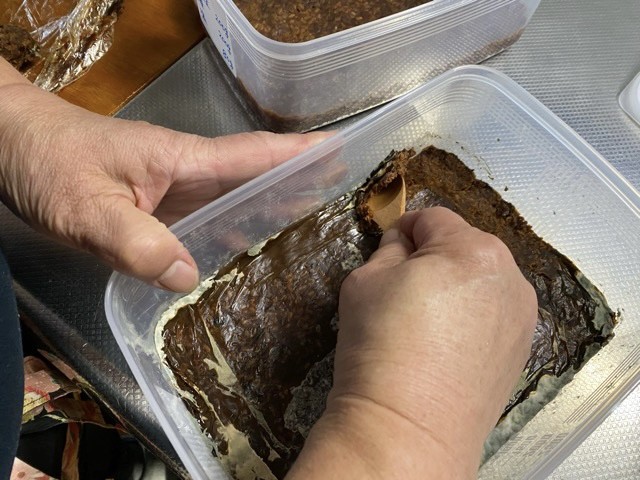
★There were gaps between the miso and the plastic wrap and containers, so the miso was exposed to air and mold grew.
★I used two 500 ml plastic bottles as weights, but their shape probably wasn’t a good fit.
Tips for Homemade Miso
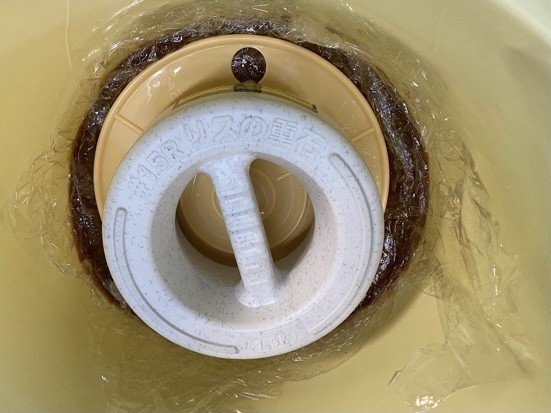
Miso tends to get moldy when it’s exposed to air, so I think a deep container that reduces the surface exposed to air is best. It may also be better to put the weight evenly over the whole surface of the miso.
Instead of a weight, you can pour in 1–2 cm of shochu: the alcohol helps prevent mold and makes the miso mellow and delicious.
A pressure cooker is recommended for boiling the beans. It’s quick and makes them nice and soft.
If Your Miso Gets Moldy
Even if mold does appear on your miso, it’s fine as long as you neatly remove that part ✨
Final Thoughts
I thought homemade miso would be really difficult, but it was surprisingly easy to make. I’d love to eat some delicious miso, so I want to try making homemade (soybean) miso again!
And I’d be happy if this blog is even a little helpful to someone ☺️
Bonus
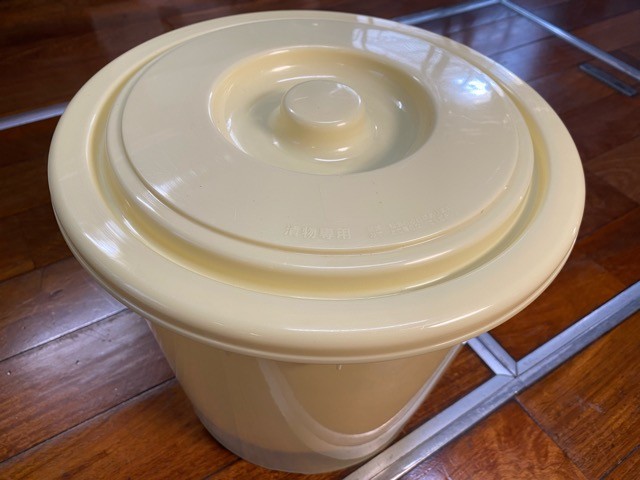
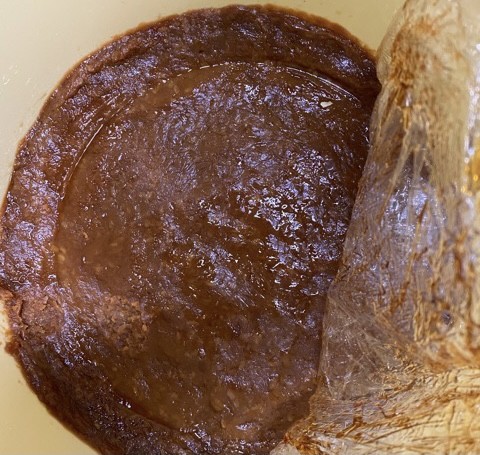
By the way, I also sneakily made some soybean miso at home on my own lol
 じびー
じびーI bet this miso would be delicious made into Miso Peanuts (a sweet miso-coated peanut snack, a classic school-lunch dish in Chiba, Japan) 🤤
This turned into a long post, but thank you so much for reading all the way to the end ✨